-
Social IssuesJun 15, 2026
The Search for Lebanon’s Missing and Forcibly Disappeared: Interdisciplinary Science for a Humanitarian Cause
- Joyce Nassar
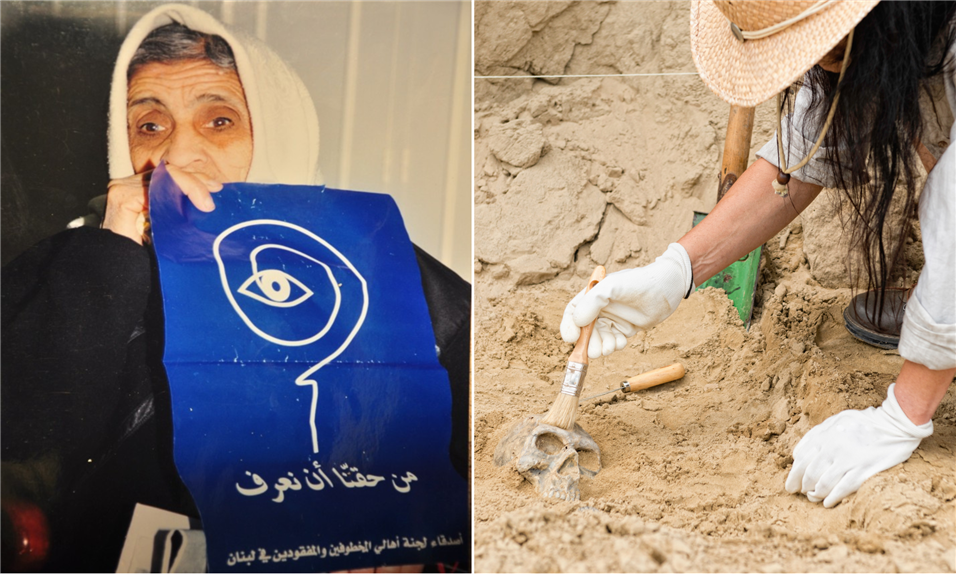 Source (image on the left): Committee of the Families of the Kidnapped and Disappeared in Lebanon (CFKDL)
Fifty-one years since the outbreak of the 1975-90 war, Lebanon continues to grapple with unresolved legacies of conflict, including transitional justice, truth and reconciliation, and collective healing, particularly for the families of the missing and forcibly disappeared.
In the decades since the end of the war, the country has made some progress on this issue, such as the establishment of the National Commission for the Missing and Forcibly Disappeared. Yet, significant institutional, legal, and political challenges remain, compounded by limited public awareness, fragmented knowledge, and fading memories.
It is in this context that the Lebanese Center for Policy Studies (LCPS) is launching a series of papers addressing the issue of the missing and forcibly disappeared, focusing on themes related to “Dealing with the Past.” Through this endeavor, LCPS aims to inform policymakers, raise awareness, and advance practical solutions, with a particular emphasis on conflict prevention, peacebuilding, and social justice.
In this installment of the Dealing with the Past series, Joyce Nassar explores the search for Lebanon’s missing and forcibly disappeared persons, highlighting how archaeology, forensic science, and humanitarian investigations work together to uncover the truth. The author examines the complex process of tracing, recovering, and identifying human remains, emphasizing the role of the National Commission for the Missing and Forcibly Disappeared in restoring dignity, accountability, and collective memory.Joyce Nassar (PhD) is an archaeologist and anthropologist who served on Lebanon’s first National Commission for the Missing and Forcibly Disappeared between 2020 and 2025. She has conducted extensive fieldwork in Lebanon, Syria, and Jordan. She has contributed to scientific efforts to locate missing persons through projects with the ICRC and pioneered the integration of archaeological methods into forensic programs within the Lebanese University. Her engagement with this work is also deeply personal, as members of her own family went missing during the civil war.