-
PoliticsNov 19, 2026
Bridging the Gap Between Citizen Priorities and the Legislative Agenda in Times of Crisis
- Zeina Sami El-Helou, Peter Chouayfati
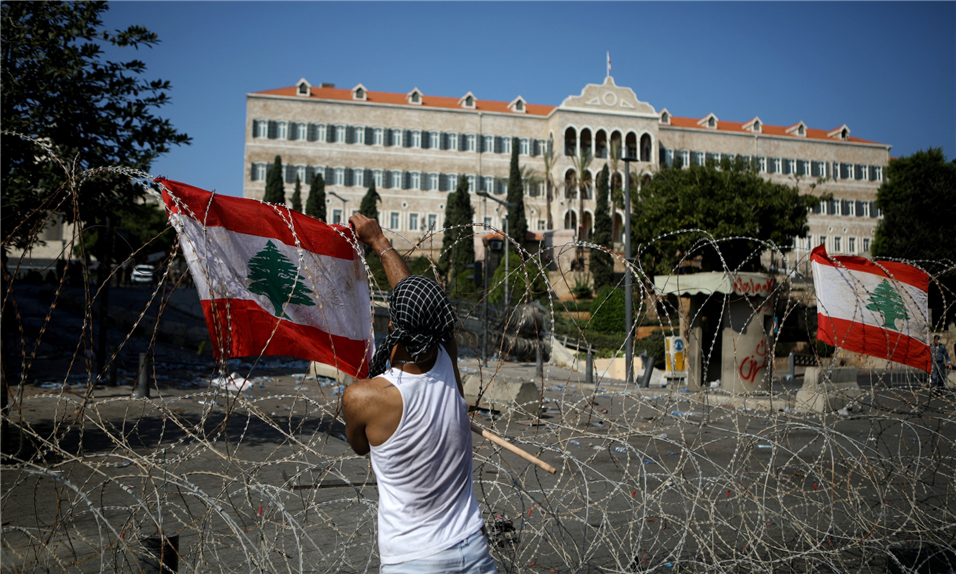 Photo by PATRICK BAZ / AFP
This article is supported by the Embassy of the Kingdom of the Netherlands in Beirut. The opinions expressed herein do not necessarily reflect those of the donor.
Lebanon’s 2026 parliamentary elections have been postponed, and war has once again overtaken the national political agenda. Yet the question that framed the electoral debate before the 2026 military escalation remains as relevant as ever: Do citizens believe that political institutions represent their interests and address their most pressing needs?
This article argues that many Lebanese do not. Public frustration stems less from ideological divisions than from a growing disconnect between citizen priorities and the concerns of the political class. As economic insecurity, displacement, deteriorating public services, and social vulnerability intensify, many Lebanese increasingly view formal politics as irrelevant to their daily lives.
The analysis presented here is based on findings from a public opinion study conducted by the Lebanese Center for Policy Studies (LCPS) between December 2025 and February 2026, when parliamentary elections were still expected to take place.
Although the political context has since evolved, the study remains valuable because it captures public attitudes immediately before the postponement and renewed escalation. It therefore provides an important benchmark for understanding trust in institutions, perceptions of political actors, and citizens' willingness to engage in democratic processes during a period of profound uncertainty.
Using a mixed-methods approach, the research combined a nationally representative survey of 1,200 respondents, with 18 focus group discussions involving 141 participants across 15 districts.
The findings reveal widespread hardship, declining trust in political institutions, and growing skepticism about elected representatives. Political participation is increasingly shaped by immediate survival needs rather than expectations of reform, reflecting a broader erosion of democratic representation and institutional legitimacy.
Understanding these perceptions remains essential for assessing the prospects of democratic representation, political participation, and institutional legitimacy in Lebanon today.
Eroded Resilience: Families in Crisis
Lebanon's cost-of-living crisis has become the defining feature of daily life, eroding household resilience and reshaping social trajectories. Over the past seven years, collapsing purchasing power, rising unemployment, and depleted savings have left many families struggling to meet basic needs.
Most respondents reported worsening financial conditions since 2020, with many unable to cover essential expenses. Coping strategies, including reducing spending on healthcare and education, borrowing money, selling assets, or relocating to cheaper housing, have become increasingly common. These measures reflect not only immediate hardship but also long-term disruptions to household stability and future prospects, particularly for younger generations.
The crisis cuts across regions and social groups, although Beirut appears somewhat less affected than other areas. Young people expressed particular concern about unemployment, limited opportunities, interrupted education, and delayed life plans. They also reported significantly higher levels of hopelessness than older respondents, highlighting the profound impact of the crisis on expectations for the future. Feelings of despair and uncertainty were widespread regardless of region, sect, or age.
Since the study was completed in early 2026, conditions have deteriorated further. Inflation accelerated throughout the year, intensifying pressures on household budgets and further eroding purchasing power. The renewed regional war, rising fuel costs, continued Israeli attacks on southern Lebanon, and repeated displacement have compounded existing vulnerabilities, pushing hardship beyond the levels captured in the data.
Overall, the findings depict a society under severe strain. Economic collapse has generated widespread hardship and despair, while steadily exhausting the savings, social networks, and coping mechanisms that once helped families absorb shocks. As resilience declines, households become increasingly vulnerable to future economic and political instability.
The Governance Gap: Citizens Left Behind
One of the study’s most striking findings is the disconnect between citizens’ daily struggles and government priorities. Nearly 78% of respondents reported that public policies have little or no impact on their lives, a perception shared across regions, age groups, and sectarian communities.
Perceptions of how much government policy affects daily life vary modestly by age. Among young respondents, the state’s impact is felt mainly through what it fails to provide. They associate it with unemployment, low wages, and limited opportunities, while middle-aged respondents, who rely more heavily on public healthcare and education, were somewhat more likely to say that government policy has a moderate impact on their daily lives. Older respondents were divided, crediting the state for pensions while pointing to its failure to provide adequate protection.
Regional variations were evident. Respondents in the Bekaa and North Lebanon reported the strongest sense of neglect and abandonment. In the South, many described the state as visible, mainly through taxes and fines rather than service provision. Beirut stood out as the only area where respondents more frequently acknowledged some policy impact, reflecting the greater visibility of government action in urban settings.
Despite these differences, citizen priorities were remarkably consistent. Respondents emphasized job creation, economic recovery, reconstruction, social protection, and improved public services, particularly electricity and water. Longer-term issues, including environmental and gender-related reforms, received less attention amid mounting socio-economic pressures.
When asked why progress remains elusive, participants overwhelmingly pointed to corruption, clientelism, and sectarian power-sharing arrangements that undermine accountability and block reform.
These perceptions have significant implications for political engagement. As confidence in institutions declines, citizens increasingly resort to private coping strategies, emigration plans, or informal support networks. Hardship and frustration reinforce perceptions of state irrelevance, narrowing public priorities to immediate survival. When government appears disconnected from everyday concerns, political participation risks becoming less a vehicle for change than a means of securing access to scarce resources.
Ballots Without Belief: Lebanon’s Political Withdrawal
The study reveals a political landscape increasingly defined by disengagement, disillusionment, and a sense of futility. While around half of eligible Lebanese participated in the 2022 parliamentary elections, broader civic engagement remains limited.
Most political activity takes place in private conversations among family and friends, while attendance at public meetings, demonstrations, or direct contact with officials is rare. Among those who abstained from voting, distrust in the political system was the primary reason (39.3%), followed by the belief that voting would not make a difference (18.5%).
Focus group discussions reinforced these findings. Participants frequently described politics as corrupt, unresponsive, and incapable of addressing citizen concerns. Many viewed the political arena as controlled by entrenched elites, leaving little room for meaningful change.
This sense of powerlessness has contributed to a broader culture of withdrawal, particularly among younger generations. Parents increasingly discourage political engagement, while many young people have internalized the belief that participation is ineffective. As a result, political disengagement has become not only an individual response but also a generational one.
Attitudes toward citizen consultation further reflect this alienation. Large majorities in districts such as Beirut I and Jbeil-Keserwan expressed little interest in being consulted by lawmakers, reflecting skepticism about whether participation would influence policy. In contrast, respondents in peripheral regions, including the Bekaa and parts of the South, were more receptive to consultation, viewing it as recognition of their political presence and concerns.
These trends point to a deeper legitimacy crisis. Parliament registered the lowest levels of public trust, while the Lebanese Armed Forces stood out as the only institution enjoying high confidence, largely because they are perceived as a guarantor of stability.
Overall, electoral participation persists formally but is increasingly hollowed out by distrust. As confidence in representative institutions declines, many citizens retreat from public life and rely instead on clientelist or partisan networks, further weakening democratic accountability.
Elections as Ritual, Not Reform
The study reveals deeply fractured trust in the political system and low enthusiasm for the now-postponed 2026 parliamentary elections. Fewer than half of respondents expressed a willingness to participate. Only 17.5% said they would “definitely” vote and 26.5% would “probably” vote, while roughly a quarter remained undecided and nearly 30% leaned toward abstention. Many questioned the integrity of the process or viewed elections as ritualistic exercises unlikely to produce meaningful change.
A smaller group expressed cautious optimism, suggesting elections could still offer an opportunity for change, though this hope was tempered by disappointment. Citizen priorities remained overwhelmingly economic and social, focusing on job creation, healthcare, education, electricity, reconstruction, and security in southern Lebanon.
Focus group discussions revealed a striking contradiction. Many participants intended to vote despite dissatisfaction with political parties, government performance, and even candidates they had previously supported. Voting was often perceived less as a means of influencing policy than to maintain access to services, assistance, and patronage networks.
Among the abstainers, distrust, perceived futility, and dissatisfaction with available candidates dominated. In Hezbollah strongholds, support for the Amal-Hezbollah alliance was frequently described as an act of loyalty and identity, even among those critical of its performance. Elsewhere, particularly in the Bekaa, dissatisfaction often translated into abstention rather than support for alternative political forces.
These findings suggest that electoral behavior is shaped as much by survival strategies as by democratic accountability, reflecting citizens' dependence on networks that compensate for the state's inadequate service provision.
Public perceptions of parliament were overwhelmingly negative. Respondents viewed it as disconnected from citizens' concerns and ineffective in addressing pressing challenges. Reformist MPs elected in 2022 have done little to alter these perceptions, with 61.4% expressing disappointment in their performance. Electoral participation therefore persists but largely detached from expectations of representation or meaningful political change.
The Missing Link: Inclusion and Mobilization
Support for women’s and youth participation in politics is widespread, but it often remains symbolic rather than substantive. More than 80% of respondents support women’s involvement in political life, yet nearly 60% believe women have little real influence. Similarly, while 56.3% favor lowering the voting age to 18, young people continue to be viewed as politically marginalized.
Focus group discussions suggest that these barriers are largely structural. Participants pointed to exclusionary practices within political parties and institutions that limit meaningful engagement. However, perceptions differ by group. Women’s underrepresentation is frequently attributed to personal choice, obscuring systemic barriers and reinforcing the misconception that disengagement is voluntary.
In contrast, youth exclusion is more readily linked to broader political failures, including corruption, lack of reform, and the dominance of entrenched party structures. This contrast highlights how women’s marginalization is often normalized, while youth disengagement is recognized as evidence of institutional dysfunction.
Participants also expressed a strong desire for a new political language rooted in respect, recognition of hardship, and practical solutions. Across regions and social groups, respondents criticized inflammatory rhetoric and divisive discourse, viewing moderate and constructive communication as more credible and responsive to citizens’ concerns.
The findings suggest that widening political participation requires more than formal commitments to inclusion. Citizens want political actors who address concrete challenges and communicate in ways that reflect lived realities. More inclusive institutions, coupled with citizen-centered and less polarizing discourse, could help rebuild trust and encourage greater civic engagement.
Competing Narratives Between Two Wars
The survey suggests that citizens want political discourse to focus less on ideological divisions and more on governance, accountability, and everyday concerns. More than 74% of respondents identified institutional reform and combating corruption as more urgent than broader geopolitical debates.
Similarly, nearly 70% supported ending hostilities with Israel through direct or indirect negotiations, provided the state retains exclusive authority over arms. These findings indicate that many citizens prioritize stability, effective governance, and state sovereignty over ideological agendas.
Views diverge, however, on the relationship between the state and the resistance. More than half of respondents opposed supporting both simultaneously, while fewer than one-third expressed support for that position. This division reflects competing visions of security and statehood: some regard resistance as essential for national defense, while others see it as an obstacle to building an effective and sovereign state.
The findings also reveal widespread disillusionment with political alternatives. The 2019 uprising has lost much of its appeal, with 88% of respondents stating that it no longer represents their aspirations.
At the same time, attitudes toward sectarianism expose a fundamental contradiction. While 79% support abolishing the sectarian political system and establishing a civil state, a similar proportion considers protecting their sect essential to their family's security.
Together, these findings illustrate a society caught between competing narratives. Citizens increasingly reject sectarianism, corruption, and political paralysis, yet continue to rely on sectarian identities as sources of protection in an uncertain environment. This contradiction reflects the challenge of building trust in state institutions while insecurity and weak governance continue to drive citizens toward familiar communal structures.
Key Takeaways
The study reveals a crisis that extends beyond economic hardship and political dysfunction to a deeper erosion of trust in institutions and democratic participation. Economic insecurity continues to undermine household resilience, limit opportunities for young people, and fuel emigration. At the same time, citizens increasingly perceive political institutions as disconnected from their needs, weakening legitimacy and encouraging withdrawal from public life.
Political participation persists, but often without confidence that it can produce meaningful change. Elections are frequently viewed as mechanisms for maintaining access to services and patronage rather than instruments of accountability. Trust in parliament remains low, reformist actors have struggled to meet expectations, and many citizens feel unable to influence political outcomes.
The findings also highlight a gap between citizen priorities and the political agenda. Respondents consistently emphasized jobs, social protection, reconstruction, education, healthcare, and reliable public services. They expressed a strong preference for practical solutions and a less divisive political discourse centered on citizens' everyday concerns.
Ultimately, rebuilding trust will require more than institutional reforms. It demands visible improvements in service delivery, meaningful opportunities for citizen engagement, and greater accountability from elected officials. Without tangible results, disillusionment is likely to deepen, further weakening democratic participation and reinforcing reliance on informal, clientelist, and sectarian networks. Reconnecting public institutions with citizens' priorities remains essential to restoring confidence in governance and strengthening Lebanon's social and democratic fabric.
This article draws on findings from the forthcoming “Rebuilding Trust Between Citizens and Government Through Policy Implementation and Oversight,” a detailed LCPS report by Zeina Sami El-Helou and Peter Chouayfati. The report provides a comprehensive analysis of the study's methodology, findings, and policy implications.
Zeina Sami El-Helou is a political scientist, researcher, and development consultant with over 25 years of experience in governance, political reforms, social inclusion, and evidence based policymaking. She holds a master’s degree in journalism (Université Assas – Paris II / Lebanese University) and a DEA in Political Science (Saint Joseph University). Her professional work spans research, training, and facilitation on human rights, political reform, and economic and social policy.Peter Chouayfati is a researcher at LCPS. His research focuses on Lebanese politics, democracy, governance, and migration. He holds a BA in Political Science and International Affairs with distinction from the Lebanese American University and an MLitt in Middle East, Caucasus, and Central Asian Security Studies from the University of St. Andrews.