-
Social IssuesMay 20, 2026
The Past Is in Us and Around Us: The Societal Impact of Missing Persons from the Lebanese Civil War
- Nayla Khodr Hamadeh
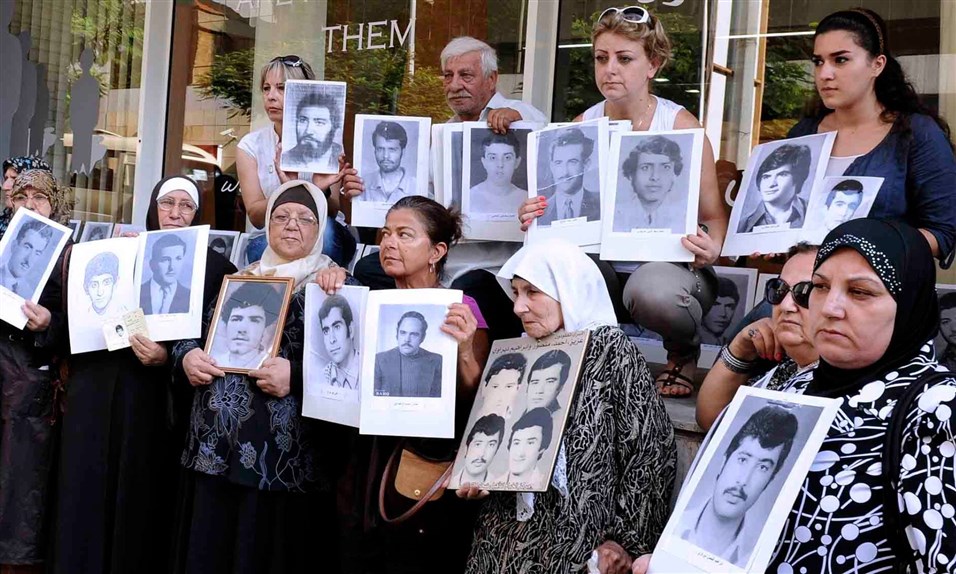 Source: Committee of the Families of the Kidnapped and Disappeared in Lebanon (CFKDL)
Fifty-one years since the outbreak of the 1975-90 war, Lebanon continues to grapple with unresolved legacies of conflict, including transitional justice, truth and reconciliation, and collective healing, particularly for the families of the missing and forcibly disappeared.
In the decades since the end of the war, the country has made some progress on this issue, such as the establishment of the National Commission for the Missing and Forcibly Disappeared. Yet, significant institutional, legal, and political challenges remain, compounded by limited public awareness, fragmented knowledge, and fading memories.
It is in this context that the Lebanese Center for Policy Studies (LCPS) is launching a series of papers addressing the issue of the missing and forcibly disappeared, focusing on themes related to “Dealing with the Past.” Through this endeavor, LCPS aims to inform policymakers, raise awareness, and advance practical solutions, with a particular emphasis on conflict prevention, peacebuilding, and social justice.
In this installment of the Dealing with the Past series, Nayla Khodr Hamadeh examines the lasting societal impact of missing and forcibly disappeared persons from the Lebanese Civil War. It explores how unresolved disappearances continue to deepen trauma, mistrust, and sectarian divisions while hindering reconciliation and social cohesion. The study also highlights the importance of transitional justice, education, legal reform, and collective memory in addressing the past and fostering healing, solidarity, and a more inclusive future for Lebanon.
Nayla Khodr Hamadeh is an education specialist advancing peacebuilding, dialogue, and social cohesion through history education. Co-founder and former president of the Lebanese Association for History, she empowers educators to address contested pasts through critical inquiry, oral history, and inclusive narratives, supporting reconciliation and collective memory in Lebanon and beyond.